

Neurofeedback Therapy in the Bay Area:
Enhancing Brain Function and Emotional Well-Being
Neurofeedback for Trauma Recovery, Attention, and Emotional Regulation
-
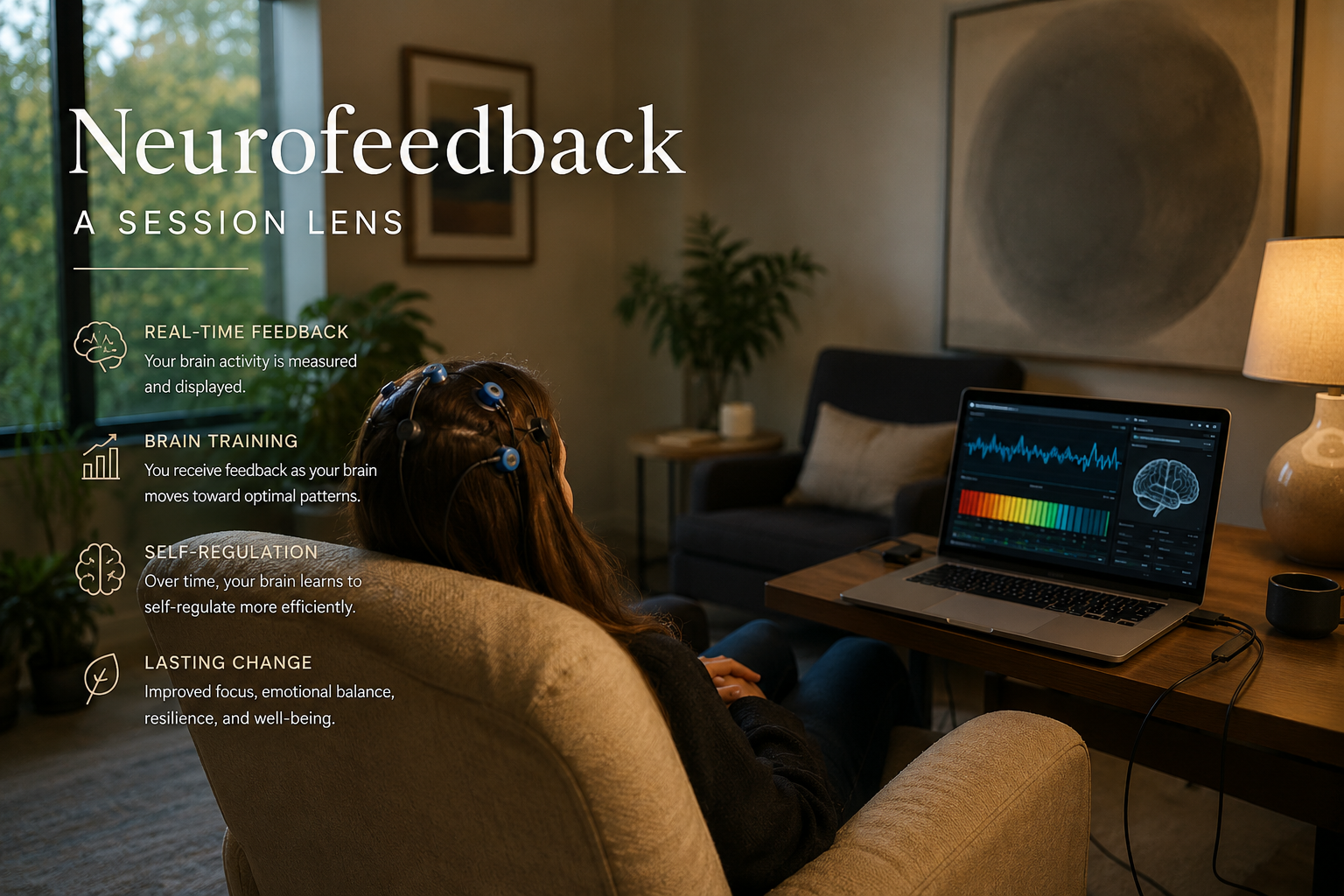
Neurofeedback, also known as EEG biofeedback, is a non-invasive, evidence-informed approach that helps individuals learn to regulate their brain activity through real-time feedback. By observing patterns of brainwave activity, neurofeedback training can help improve self-regulation, attention, emotional resilience, and cognitive functioning.
Think of neurofeedback as a workout for the brain. Just as physical exercise strengthens muscles, neurofeedback helps train the brain to function more efficiently and adaptively.
-
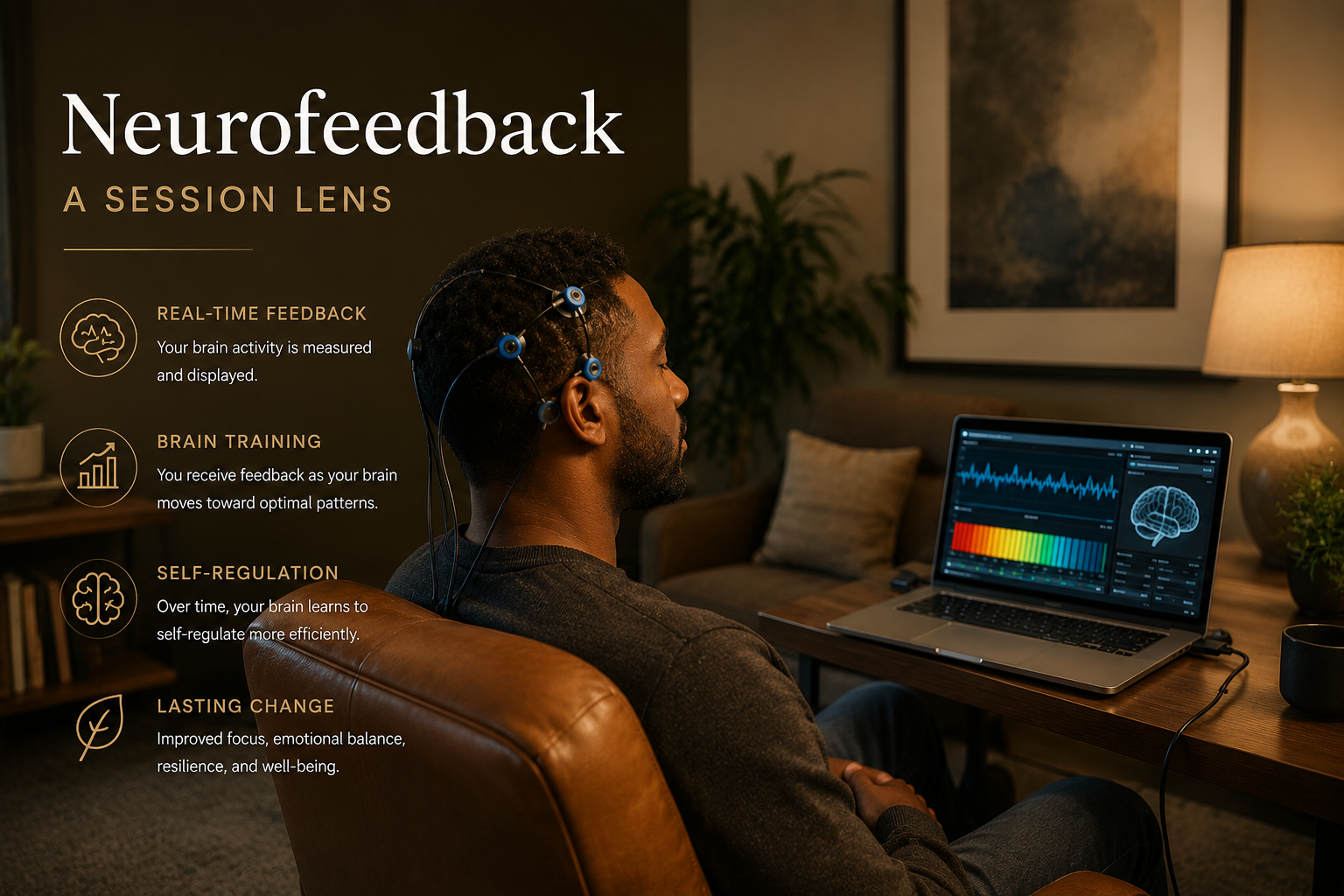
During a neurofeedback session, sensors are placed on the scalp to monitor brainwave activity. This information is fed into specialized software that provides visual or auditory feedback when the brain moves toward desired patterns of functioning. Over time, the brain learns to maintain these healthier patterns more consistently through a process called operant conditioning.
Neurofeedback does not involve electrical stimulation, medication, or invasive procedures. It is a training process that supports the brain's natural capacity for learning and change.
-
Research suggests neurofeedback may be beneficial for individuals experiencing:
Attention-Deficit/Hyperactivity Disorder (ADHD)
Anxiety and chronic stress
Trauma and Post-Traumatic Stress Disorder (PTSD)
Sleep difficulties and insomnia
Emotional dysregulation
Cognitive challenges following concussion or brain injury
Performance optimization for professionals, creatives, and athletes
While neurofeedback is not a cure-all, studies indicate promising outcomes for certain conditions, particularly ADHD and trauma-related symptoms. Research also suggests it may be helpful as part of a comprehensive treatment plan for anxiety and emotional regulation.
-
For individuals living with the effects of trauma, neurofeedback may help regulate patterns of hyperarousal, emotional reactivity, and nervous system dysregulation. Emerging research has shown reductions in PTSD symptoms and improvements in emotional regulation following neurofeedback training.
As a depth-oriented psychologist, I view trauma recovery through both neurobiological and psychological lenses. Neurofeedback can complement psychotherapy by supporting the nervous system's capacity to regulate itself while deeper emotional and relational healing unfolds.
-
Neurofeedback and Cognitive FunctioningNeurofeedback can help improve focus, concentration, memory, mental clarity, emotional resilience, and stress management. By encouraging healthier brainwave patterns, it supports the brain's ability to function more efficiently and adapt to challenges.
An Integrative Approach
Neurofeedback is often most effective when combined with psychotherapy and other holistic approaches. It can be integrated with psychodynamic, Jungian, somatic, mindfulness-based, and cognitive-behavioral therapies to support both symptom relief and deeper personal growth.
Is Neurofeedback Right for You?
Neurofeedback may benefit individuals experiencing attention difficulties, anxiety, chronic stress, trauma-related symptoms, emotional dysregulation, or cognitive fatigue. It may also appeal to those seeking a non-medication approach to improving mental performance and overall well-being.
Neurofeedback Therapy in the Bay Area
If you're interested in exploring neurofeedback, a consultation can help determine whether it fits your needs and goals. Neurofeedback can be used as a stand-alone intervention or integrated with psychotherapy to support emotional balance, cognitive functioning, and long-term psychological health. Serving adults throughout the Bay Area and California via telehealth.